
Machine Risk Assessment Services
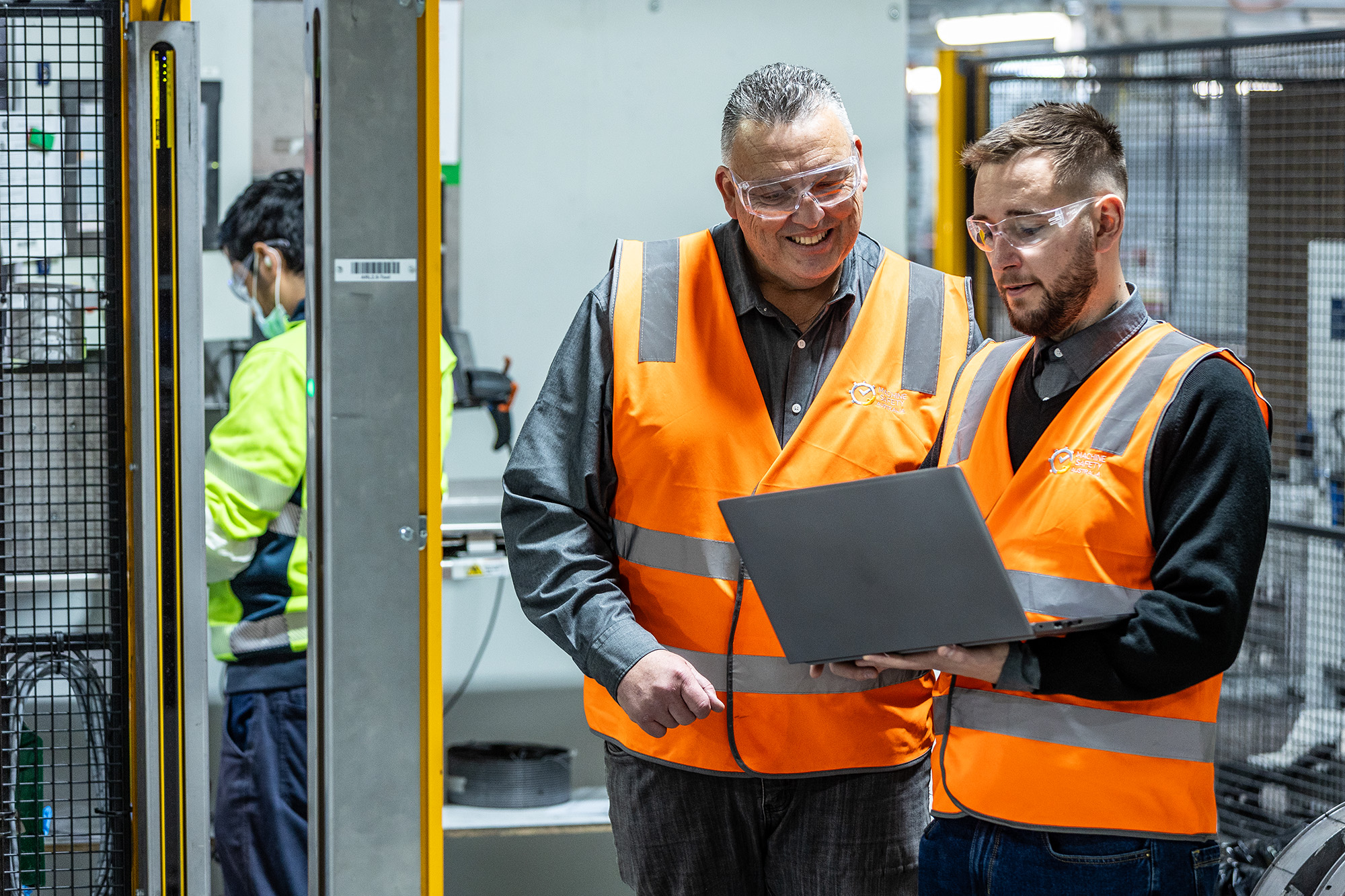
Machine Risk Assessment offers an in-depth analysis of your workplace, reviewing processes, situations, and machinery that could cause injury or damage. A risk assessment is the first step towards ensuring workplace safety and process efficiency, all while adhering to machine safety requirements. Machine Safety Australia (MSA) identifies hazards, quantifies risks, and implements corrective measures in accordance with AS 4024.1201 & ISO12100 standards. The team of safety experts at MSA will guide you through every step of the way, bridging the gap between technical expertise and business priorities. Whether you’re implementing new machinery or looking to improve the safety of your existing equipment, our certified safety consultants are here to help!
The First Step to Workplace Safety – Knowing the Risks
Machine Risk Assessment identifies and evaluates machinery-related hazards. We cover all mechanical, electrical, and functional safety disciplines. We leverage our extensive experience and meticulous methodology to identify and assess risks that Health and Safety or non-specialist engineering personnel might overlook or underestimate. We work closely with you to perform a technical inspection of your machinery in accordance with the applicable national and international standards and directives. We start by reviewing and examining the machine’s design, operation, and intended use. Afterwards, we find mechanical, electrical, ergonomic, and environmental hazards and categorise them based on their severity and likelihood of occurrence. We evaluate each hazard to determine the level of risk and consider factors like frequency of exposure and potential consequences to operators and bystanders.
Making Informed Decisions Around Workplace Safety Measures
Based on our risk assessment, we identify, prioritise, and implement appropriate safety measures for your equipment. MSA provides detailed reports throughout the Machine Risk Assessment process, helping stakeholders fully understand the issues and recommended action plans. In addition, we recommend regular reviews and updates to the risk assessment to accommodate changes in machinery, operations, or safety regulations, ensuring ongoing compliance and continuous improvement in machine safety practices.
Why Machine Risk Assessment Matters
Identify and mitigate risks to secure a safer working environment. Guarantee compliance with AS /NZS 4024.1 2019, Safety of machinery standards and other relevant regulations. Extend the service life of your machinery through early hazard detection. Save time and money by avoiding costly downtime, medical expenses, and legal liabilities. Gain confidence that your machinery is safe and compliant with industry standards.
Trusted Partner & Expert in Machine Safety Consulting
With our extensive experience in machine safety, we’ve encountered and addressed a wide range of challenges. As specialists in planning, prioritisation, and project management, we recommend solutions that effectively optimise your resources and budget. As machine safety consultants, Machine Safety Australia (MSA) seamlessly implements risk management solutions within your operations, allowing you to maintain business continuity. This approach minimises your ‘latent risk period’ and ensures that safety improvements are integrated smoothly. We work as an integral part of your team, customising our processes and reporting to meet your needs. By spending time on the factory floor, engaging with your operators, and understanding your workflows, we deliver precise solutions tailored to your company’s requirements.
Protecting Your Workplace & Your Business
Machine Risk Assessments are not just a regulatory requirement but an essential step in protecting your work environment. Failure to take this critical step can have serious consequences, including accidents, legal exposures, and operational downtime. We help you identify those hazards and implement corrective measures to create a safer and more efficient working environment for your employees. Our commitment to compliance with industry standards and regulations, such AS /NZS 4024.1 2019, Safety of machinery standards. AS/NZS 4024.1, underscores our dedication to best practices in machine safety. We stay updated with the latest developments in Machine Safety Standards Australia, ensuring our assessments and recommendations align with current guidelines.
Frequently Asked Questions
What is machine safety?
Machine safety involves measures and protocols to protect operators and bystanders from machinery-related hazards. These measures include safeguarding techniques, risk assessments, and compliance with safety standards. Machine safety is critical for preventing workplace injuries, ensuring operational efficiency, and avoiding costly legal repercussions.
What is risk assessment and why are risk assessments necessary?
Risk assessment is the process of identifying and evaluating potential hazards. It is necessary to prevent accidents and ensure a safe working environment.
When must a risk assessment be carried out?
A certified safety consultant should conduct a risk assessment during the initial design phase before the machinery is used and periodically throughout its operational life.
When must a risk assessment be reviewed?
Risk assessments should be reviewed regularly to ensure they remain relevant and effective. Regularly typically means at least annually, but the exact frequency can vary based on the specific industry, the nature of the machinery, and the level of risk involved. Additionally, risk assessments must be reviewed whenever there are significant changes in machinery, operations, or safety regulations.
Who is responsible for mechanical equipment safety?
Responsibility for mechanical equipment safety typically lies with the employer, but it involves collaboration among engineers, operators, and safety experts.
What does a machine safety risk assessment involve?
It involves identifying hazards, quantifying risks, assigning corrective measures, and determining required Performance Levels according to AS 4024 standards.