
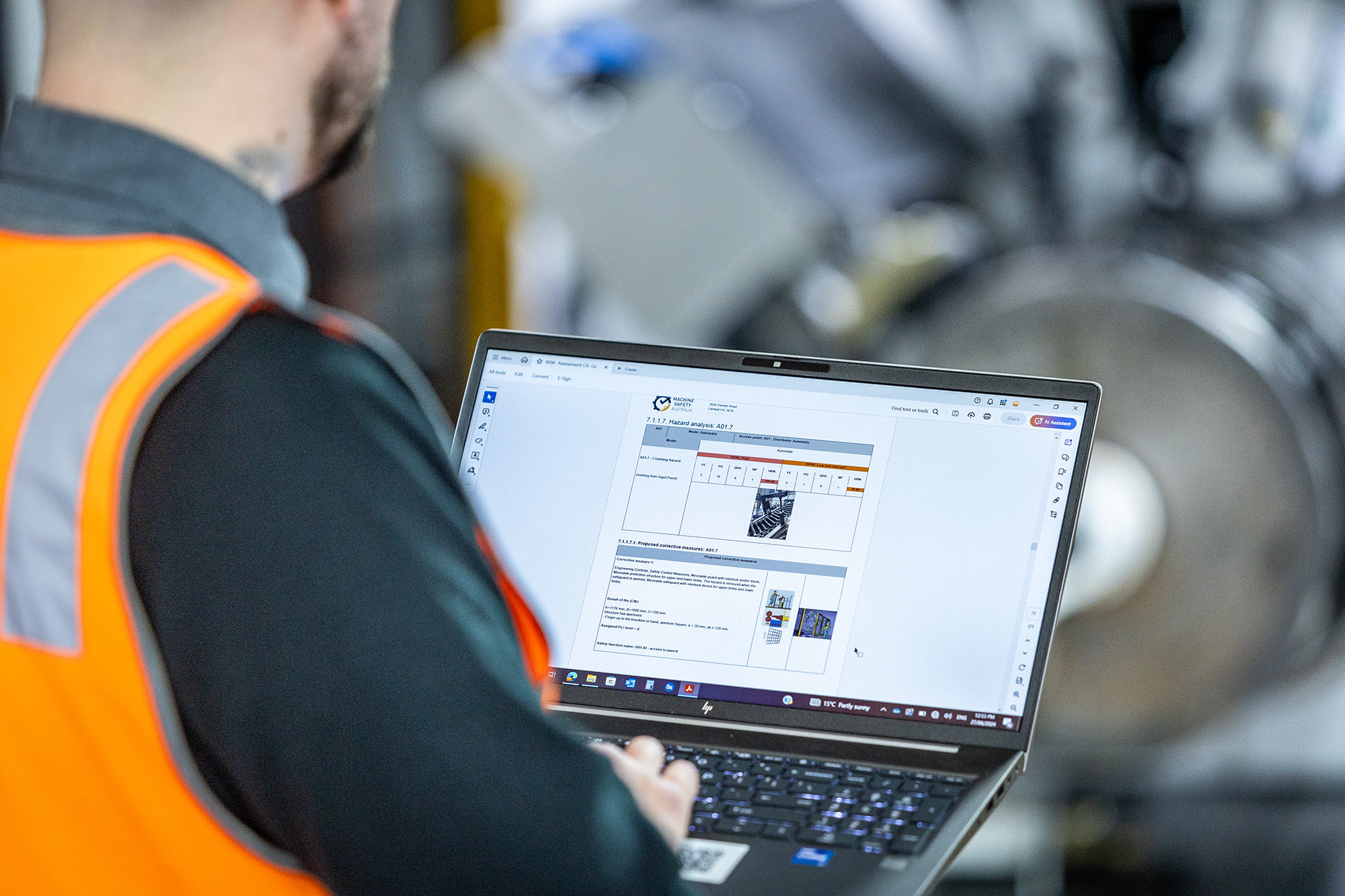
Machine Safety Requirement Specifications
Machine Safety Requirement Specifications (MSRS) are formal engineering documents that define the specific technical and safety requirements necessary for machinery to achieve compliance with applicable regulations, standards, and industry best practices. They clearly specify the required engineering solutions, including hazard controls, safeguarding measures, and safety-related control system (SRP/CS) functions, while referencing the relevant standards that govern their design, implementation, and performance.
In alignment with ISO 13849-1:2023, the MSRS incorporates the requirements of a Safety Requirements Specification (SRS) by defining the intended safety functions, operating modes, and system boundaries, as well as the required performance levels (PLr), response times, fault reactions, and diagnostic coverage. It also details the functional behaviour of safety-related parts of control systems under normal and fault conditions, interfaces with other systems, and assumptions relating to the operating environment and user interaction.
When the MSRS is fully implemented, and the specified solutions are properly verified and validated against the defined requirements, the machinery can be considered compliant and capable of operating safely, reliably, and efficiently in accordance with regulatory and industry requirements.
Your Safety is Our Priority
MSA follows a structured process to develop and validate machine safety requirement specifications:
Understanding Your Needs
We start with a detailed consultation to understand your machinery and operational needs. We work with your team to gather detailed information about the machine’s intended use, operational environment, and any machine safety concerns unique to your business. By analysing your existing machine safety protocols and compliance status, we ensure our approach aligns with your business goal.
Risk Assessment
Following the initial consultation, we perform a thorough risk assessment to identify potential hazards associated with your machinery. This involves evaluating all operational stages, from installation to maintenance, while also considering your employee’s handling of the machine. Our goal is to reduce risk to an acceptable level while prioritising operator safety.
Developing Your MSRS
Based on our risk assessment findings, we develop a detailed Machine Safety Requirement Specification (MSRS) tailored to your machinery. This document outlines all the necessary safety measures, including protective devices, control systems, and machine safety protocols.
Once the MSRS is finalised, MSA will collaborate closely with your team to ensure a smooth implementation process.
Machine Safety Australia extends beyond documentation. We provide training and support to help your team maintain a safe working environment.
Key Benefits of Equipping MSRS
Implementing detailed Machine Safety Requirement Specifications with Machine Safety Australia significantly enhances your workplace safety by reducing machinery-related risks. Our specifications ensure compliance with machine safety standards, keeping your operations within regulatory bounds. By addressing potential machine hazards, we help your business prevent machine downtime and boost productivity.
By partnering with MSA, you ensure that your business not only meets machine safety standards but also fosters a culture of safety and reliability.
Ensuring Machine Safety Compliance with Industry Standards
Our machine safety requirement specifications align with these key industry standards:
- AS /NZS 4024.1 2019, Safety of machinery standards: Focuses on the safety machinery guidelines.
- ISO 12100: Tackles the general principles for risk assessment and risk reduction.
- ISO 13849: A guide on the safety of machinery and safety-related parts of control systems.
- IEC 62061: An overview of the functional safety of safety-related electrical, electronic, and programmable electronic control systems.
With these regulations in our hands, we help your business operations comply with the relevant machine safety requirement and best practices, providing an established framework for machine operations.
Secure Your Machine Operations with MSA
Achieve the highest machine safety standards for your machinery with Machine Safety Australia. Our tailored Machine Safety Requirement Specifications are designed to safeguard lives, protect your business assets, and boost operational efficiency.
Frequently Asked Questions
What are Machine Safety Requirement Specifications?
Machine Safety Requirement Specifications define the necessary safety measures and performance levels required to ensure safe operation of machinery. They include detailed documentation and validation of safety controls.
Why is having machine safety requirement specifications necessary?
MSRS is crucial for preventing machine accidents, protecting employees, ensuring compliance with safety standards, and maintaining operational efficiency.
How does MSA ensure compliance with safety standards?
Machine Safety Australia follows industry-recognised methods and aligns specifications with standards such as AS /NZS 4024.1 2019, Safety of machinery standards, ISO 12100, ISO 13849, and IEC 62061.
What resources are needed to develop these specifications?
Essential resources include risk assessments, incident reports, operating instructions, maintenance records, and validation documents.
Can MSA assist with both new and existing machinery?
Yes, MSA can help develop safety requirement specifications for new and existing machinery, ensuring that all safety measures are up-to-date and compliant.
How often should Machine Safety Requirement Specifications be reviewed and updated?
Regular reviews and updates are recommended, especially when machinery, processes, or regulatory standards change. This ensures that safety measures remain effective and compliant.
How does MSA handle non-compliance issues found during the review?
If we identify any non-compliance issues, we work with your team to develop and implement corrective actions, ensuring that all safety measures meet the required standards and regulations.